Posted by Admin on 07-03-2025 in Shiksha hub
Ph.D. From Krishnakumarsinhji Bhavnagar University
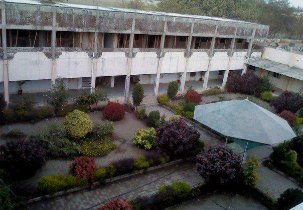
Introduction about Ph.D. From Krishnakumarsinhji Bhavnagar University
Krishnakumarsinhji Bhavnagar University, based in the coastal city of Bhavnagar in Gujarat, is a reputed institution known for its diverse academic offerings and commitment to high-quality research. Named after the erstwhile ruler of Bhavnagar, the university has expanded significantly over the years, forging strong ties between theoretical learning and practical application. For students aspiring to delve deeper into their chosen field of study, the Ph.D. program at this university represents a vital stepping stone toward becoming seasoned researchers, academicians, or domain experts. The doctorate curriculum encompasses a blend of coursework, thesis work, and hands-on research, supported by modern infrastructure such as well-equipped laboratories, digital libraries, and research centers. A key highlight is the interdisciplinary ecosystem, where scholars from various backgrounds can collaborate, thereby enriching the quality and impact of their research. Moreover, experienced faculty members and visiting experts provide mentorship and guidance that shape a scholar’s academic journey. Krishnakumarsinhji Bhavnagar University places equal emphasis on ethical research practices, scientific rigor, and societal benefit, making its Ph.D. program an excellent platform to develop a holistic perspective. Candidates are encouraged to publish papers, attend conferences, and engage in workshops that sharpen both research acumen and professional networking skills. Whether your focus is in arts, science, commerce, or any specialized field, the university’s conducive environment ensures that your doctoral work attains both academic depth and practical relevance.
Fee Structure for Ph.D. in Krishnakumarsinhji Bhavnagar University
| Tuition Fee Per Year | Registration Fee | Total Fee |
|---|---|---|
| INR 40,000 | INR 5,000 | INR 45,000 |
Admission Process For Ph.D. in Krishnakumarsinhji Bhavnagar University
The admission process for the Ph.D. program at Krishnakumarsinhji Bhavnagar University is designed to identify students who exhibit both academic proficiency and a strong inclination for research. The university maintains a transparent selection protocol, ensuring that deserving candidates from diverse backgrounds get a fair opportunity to pursue doctoral studies. Below is a broad outline of the steps involved:
- Check Eligibility: Candidates usually need a Master’s degree in a relevant subject, often requiring a specific minimum percentage or CGPA.
- Entrance Examination: Appear for the university’s Ph.D. entrance test or submit valid national-level exam scores (if the university recognizes them).
- Research Proposal: In some departments, you may be asked to draft a concise research proposal outlining your topic, methodology, and proposed timeline.
- Interview / Viva-Voce: Shortlisted applicants are invited for an interview or viva-voce, where academic aptitude and research intent are assessed.
- Merit List Announcement: Final selections are based on the cumulative performance in entrance tests, interviews, and relevant academic qualifications.
- Document Verification: Chosen candidates must verify all required academic and personal documents before formal enrollment.
- Enrollment & Fee Payment: Pay the prescribed fees and complete your registration within the given deadline to secure your seat.
Ph.D. Subjects in Krishnakumarsinhji Bhavnagar University
| Subject | Department / Field |
|---|---|
| Physics | Science & Technology |
| Chemistry | Science & Technology |
| Mathematics | Mathematical Sciences |
| Biotechnology | Life Sciences |
| Commerce | Business & Management Studies |
| English | Arts & Humanities |
| Hindi | Language Studies |
| Sociology | Social Sciences |
| Psychology | Social Sciences & Behavioral Studies |
| Education | Teacher Training & Pedagogy |
Document Required For Ph.D. in Krishnakumarsinhji Bhavnagar University
Ensuring you have all the relevant documents is pivotal for a smooth Ph.D. admission process. Krishnakumarsinhji Bhavnagar University demands certain credentials to verify your academic standing, identity, and suitability for research. Having these documents ready in both physical and digital formats can expedite your application and reduce any last-minute hassles. Below is a generalized checklist of documents typically requested by the university:
- Master’s Degree Mark Sheets & Certificates (and Bachelor’s, if required)
- Proof of Date of Birth (Birth Certificate or equivalent)
- Entrance Exam Scorecard (University test or recognized national-level exam)
- Research Proposal (if mandated by the department)
- Valid ID Proof (Aadhaar, Passport, Voter ID, or similar)
- Passport-Size Photographs
- Migration Certificate (for candidates from other universities)
- No Objection Certificate (for employed applicants)
- Experience Certificates (if relevant, particularly for part-time Ph.D. candidates)
Krishnakumarsinhji Bhavnagar University Ph.D. Syllabus
| Paper / Unit | Core Topics |
|---|---|
| Paper I: Research Fundamentals |
|
| Paper II: Advanced Subject Knowledge |
|
| Paper III: Analytical Tools & Techniques |
|
| Paper IV: Dissertation Work |
|
Krishnakumarsinhji Bhavnagar University Research Methodology
- Identifying Research Gap: Conduct thorough literature reviews to discern unexplored areas.
- Choosing Methodology: Opt for quantitative, qualitative, or mixed methods as per objectives.
- Data Collection: Employ surveys, experiments, interviews, or archival research.
- Statistical & Theoretical Framework: Utilize software tools (SPSS, R) or conceptual models.
- Research Ethics: Comply with ethical standards for data handling and participant consent.
- Peer Review: Engage in academic discussions, workshops, and conference presentations.
- Continuous Refinement: Reassess hypotheses, methods, and findings throughout the study.
- Final Presentation: Prepare thesis and defend it in front of an expert panel.
Krishnakumarsinhji Bhavnagar University Highlights
| Highlights | Details |
|---|---|
| Location | Bhavnagar, Gujarat, India |
| Establishment Year | 1978 |
| Affiliation & Recognition | UGC, NAAC Accredited |
| Departments | Science, Arts, Commerce, Management, Education, etc. |
| Infrastructure | Advanced Labs, Digital Libraries, Seminar Halls |
| Faculty | Experienced Professors & Industry Experts |
| Programs Offered | Undergraduate, Postgraduate, Doctoral, Diploma |
| Research Facilities | Project Labs, Research Centers, Collaborative Projects |
| Student Support | Career Guidance, Internship Assistance, Mentorship |
| Industry Tie-ups | Corporate Collaborations, Workshops, Consultancy Projects |
| Alumni Network | Active Alumni Association in Academia & Industry |
How To Apply For Ph.D. in Krishnakumarsinhji Bhavnagar University
- Visit Official Website: Check for Ph.D. notifications, eligibility criteria, and dates.
- Register Online: Create a user profile with valid email and personal details.
- Fill Application Form: Enter educational background, research interest, and contact info.
- Pay Application Fee: Complete online payment or follow the specified payment mode.
- Upload Documents: Scan and submit required academic and ID proofs in the desired format.
- Download Confirmation: Keep a copy of the duly filled form and payment receipt.
- Entrance Exam: Appear for the university’s Ph.D. entrance test if necessary.
- Interview / Viva: Shortlisted applicants will be invited for further evaluation.
- Check Merit List: Monitor the official website or notice boards for selection results.
- Complete Enrollment: Pay fees, verify documents, and begin your Ph.D. coursework.
Courses After Ph.D. in Krishnakumarsinhji Bhavnagar University
- Post-Doctoral Fellowships in National & International Institutions
- Advanced Diplomas in Specialized Research Tools (e.g., Bioinformatics, Big Data)
- Executive Management Programs or Certifications for Academic Leadership
- Short-Term Workshops for Skill Development in Teaching & Research Methodologies
- Additional Master’s in Interdisciplinary Domains (e.g., Intellectual Property Rights, Public Policy)
Krishnakumarsinhji Bhavnagar University Scholarship
Krishnakumarsinhji Bhavnagar University extends various scholarship schemes to ensure that deserving students can pursue higher education without being held back by financial barriers. These programs cater to different categories of applicants, including meritorious scholars, students from financially weaker sections, and those belonging to reserved communities. The university frequently collaborates with government agencies, private organizations, and alumni networks to diversify its scholarship offerings. Moreover, certain research-focused scholarships encourage Ph.D. candidates to undertake pioneering projects with substantial societal impact. By offering these financial support systems, the university aims to cultivate a vibrant academic culture where talent and hard work are recognized and nurtured. Whether you are applying for a specialized research grant or availing general scholarships, maintaining excellent academic performance often remains a primary requisite for continued support. In this way, the scholarship ecosystem not only eases the financial strain on students but also drives them toward consistent academic and research excellence.
- Merit-Based Scholarships for top scorers in university or national-level entrance exams
- Need-Based Financial Aid for economically disadvantaged students
- Government Schemes (SC/ST/OBC/Minority) for eligible candidates
- Corporate-Sponsored Fellowships aligned with specific research domains
- Research Grants & Project Funding for cutting-edge or interdisciplinary work
Krishnakumarsinhji Bhavnagar University FAQ's Regarding Ph.D.
- Q1: What is the usual duration of a Ph.D. at KKBU?
A1: Typically, it ranges between 3 to 5 years, depending on your research progress and departmental requirements. - Q2: Are national-level exam scores like UGC-NET or GATE accepted?
A2: Yes, the university often recognizes scores from UGC-NET, GATE, or other equivalent exams for Ph.D. admissions. Always confirm the latest guidelines. - Q3: Can I pursue a part-time Ph.D. if I’m employed?
A3: Certain departments may allow part-time Ph.D. pathways for working professionals, subject to submission of a No Objection Certificate. - Q4: What kind of support is provided for research?
A4: The university offers access to labs, libraries, journals, and mentorship from faculty. Scholars can also collaborate on funded research projects. - Q5: Is it mandatory to publish research papers during the Ph.D.?
A5: Most departments encourage or require at least one publication in a peer-reviewed journal before thesis submission. - Q6: Are there any hostel facilities for Ph.D. scholars?
A6: Yes, hostel facilities are available, but limited. Early application and confirmation are advised. - Q7: Does the university offer distance or online Ph.D. programs?
A7: Generally, a full-time or part-time on-campus Ph.D. is the standard format. Check official announcements for any distance or online offerings. - Q8: How can international students apply for a Ph.D. at KKBU?
A8: International applicants must fulfill eligibility criteria, secure student visas, and follow additional protocols like credential evaluations. - Q9: What if I want to change my research topic after admission?
A9: Minor shifts in research scope are typically allowed, but major changes might require approval from your guide and the departmental research committee. - Q10: Does the university host any placement drives for Ph.D. graduates?
A10: While there is no formal placement drive for doctoral scholars, the university’s career cell and faculty networks often assist in academic and industry placements.
How Shiksha Hub helps you in
-
 Student Counsellors
 -
 Career Counseling
 -
 Research
 -
 24/7 Support
 -
 Scholarships
 -
 Community