Posted by Admin on 05-03-2025 in Shiksha hub
Ph.D. From Jawahar lal Nehru Centre for Advanced Scientific Research : Introduction, Fee Structure, Admission Process, Ph.D. Subjects, Documents, Syllabus, Research Methodology, University Highlights, Scholarship, FAQs
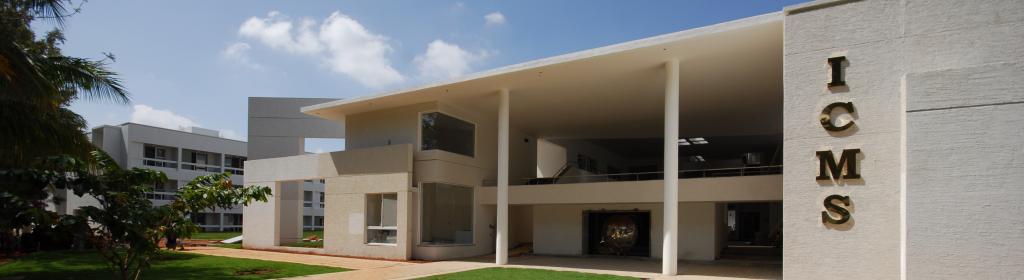
"Introduction about Ph.D. From Jawahar lal Nehru Centre for Advanced Scientific Research"
The Jawahar Lal Nehru Centre for Advanced Scientific Research (JNCASR) is a premier research institution located in Karnataka, India, renowned for its cutting-edge scientific exploration and interdisciplinary approach. Pursuing a Ph.D. from JNCASR allows candidates to immerse themselves in a vibrant academic environment where innovation, collaboration, and excellence are highly encouraged. JNCASR offers state-of-the-art laboratories, world-class faculty, and a wide range of research domains spanning physical sciences, chemical sciences, biological sciences, engineering, and more. The curriculum is carefully structured to foster independent thinking, critical analysis, and scientific leadership skills. A Ph.D. at JNCASR typically involves coursework, seminars, hands-on lab work, and a thesis based on original research. Students benefit from the institute’s strong emphasis on interdisciplinary collaborations, as well as various academic exchange programs and conferences. This helps scholars stay abreast of the latest developments in their field, while also cultivating valuable networks. JNCASR graduates are well-positioned for successful careers in academia, industry, and government sectors, thanks to the institute’s global reputation for excellence. Furthermore, JNCASR offers numerous opportunities for interaction with eminent scientists, visiting professors, and industry experts. This exposure not only enriches the learning experience but also opens doors to collaborative projects and international research ventures. If you are passionate about advancing scientific knowledge and shaping the future of research, a Ph.D. from JNCASR can be a transformative and rewarding journey.
"Fee Structure for Ph.D. in Jawahar lal Nehru Centre for Advanced Scientific Research"
| Tuition Fee Per Year | Registration | Total Fee |
|---|---|---|
| INR 25,000 | INR 2,000 | INR 27,000 |
" Admission Process For Ph.D. in Jawahar lal Nehru Centre for Advanced Scientific Research"
The admission process for a Ph.D. at Jawahar lal Nehru Centre for Advanced Scientific Research is highly competitive and is designed to identify candidates with strong academic records and research potential. Prospective students should demonstrate a keen interest in scientific inquiry and possess the requisite educational qualifications. The process generally involves an online application, followed by a thorough evaluation of the candidate’s academic background, research interests, and performance in qualifying examinations or interviews.
- Check Eligibility Criteria: Ensure you have a master’s degree (or equivalent) in a relevant field of science or engineering, along with the required minimum marks or GPA.
- Entrance Examination: Some departments may require a valid score in national-level tests such as GATE, CSIR-UGC NET, or JEST. Check the specific requirements of your chosen research area.
- Online Application: Fill out the official JNCASR Ph.D. application form, providing details of your academic background, research interests, and any relevant experience.
- Shortlisting: Based on academic records and test scores, shortlisted candidates will be called for further rounds (written test or interview).
- Interview: Selected candidates are typically interviewed by a panel of faculty members to assess research aptitude, subject knowledge, and motivation.
- Offer of Admission: Successful applicants receive an admission offer, which they must accept within the stipulated deadline. Registration details and fee payment instructions will be provided.
" Ph.D. Subjects in Jawahar lal Nehru Centre for Advanced Scientific Research"
| Subject/Field | Description |
|---|---|
| Materials Science | Focuses on the study of novel materials, nanotechnology, and advanced material properties. |
| Biological Sciences | Emphasizes molecular biology, genetics, and interdisciplinary biomedical research. |
| Chemical Sciences | Covers organic, inorganic, and physical chemistry, with research on catalysis, synthesis, and chemical dynamics. |
| Engineering Sciences | Focuses on cross-disciplinary engineering research, computational methods, and emerging technologies. |
| Theoretical Sciences | Involves theoretical physics, computational modeling, and simulations in various domains. |
| Neurosciences | Explores brain function, neural networks, and cognitive processes through experimental and theoretical approaches. |
" Document Required For Ph.D. in Jawahar lal Nehru Centre for Advanced Scientific Research"
To complete the application and enrollment process, candidates must submit a set of documents that verify their academic qualifications, personal details, and research readiness. It is important to keep both digital and hard copies of these documents organized and ready before initiating the application. The following list covers the typical documents required, but applicants should check the official JNCASR website or the specific department’s guidelines for any additional requirements or updates.
- Completed application form (online or printed copy, as required)
- Copies of academic transcripts and certificates (Bachelor’s and Master’s degrees)
- Proof of date of birth (birth certificate or secondary school certificate)
- Entrance exam scorecards (if applicable, such as GATE/NET/JEST)
- Statement of Purpose (SOP) detailing research interests and goals
- Letters of recommendation (typically 2-3 from academic mentors or supervisors)
- Valid photo ID (passport, Aadhaar, driver’s license, etc.)
- Passport-sized photographs (as per the specified format)
- Any category or reservation certificates (if applicable)
"Jawahar lal Nehru Centre for Advanced Scientific Research Ph.D. Syllabus"
| Semester/Phase | Core Topics | Elective/Research Topics |
|---|---|---|
| Phase 1 (Coursework) |
|
|
| Phase 2 (Pre-Research) |
|
|
| Phase 3 (Research & Thesis) |
|
|
"Jawahar lal Nehru Centre for Advanced Scientific Research Research Methodology"
- Interdisciplinary Collaboration: Emphasizes collaborative projects across multiple scientific domains, promoting a holistic research approach.
- Experimental Design: Encourages rigorous planning of experiments, with clear objectives, reproducibility, and controls.
- Literature Review: Guides students in conducting comprehensive literature surveys to identify research gaps and shape hypotheses.
- Data Analysis: Focuses on statistical and computational methods for analyzing complex datasets, ensuring high-quality results.
- Publication and Peer Review: Trains researchers to publish findings in reputable journals and navigate the peer-review process.
- Ethical Considerations: Stresses responsible conduct of research, data integrity, and adherence to institutional and international guidelines.
- Innovation and Patents: Encourages patent filing, industry collaboration, and translational research to maximize societal impact.
"Jawahar lal Nehru Centre for Advanced Scientific Research Highlights"
| Highlight | Description |
|---|---|
| Location | Karnataka, India |
| Establishment | Founded in 1989, focusing on advanced research and training |
| Academic Focus | Multidisciplinary approach across science and engineering domains |
| Faculty | Renowned scientists, many with global accolades and extensive research experience |
| Facilities | State-of-the-art laboratories, libraries, computing resources, and research centers |
| Collaborations | Partnerships with international universities, research institutes, and industries |
| Scholarships | Offers fellowships and financial assistance to deserving candidates |
| Ranking | Recognized among the top research institutions in India and abroad |
| Alumni Network | Graduates occupy prominent positions in academia, industry, and government |
" How To Apply For Ph.D. in Jawahar lal Nehru Centre for Advanced Scientific Research"
- Visit Official Website: Begin by visiting the JNCASR official website to check the latest Ph.D. notifications and deadlines.
- Create an Account: Register on the admission portal with a valid email address and set up a password.
- Fill Application Form: Provide personal details, academic history, and research interests accurately in the online form.
- Upload Documents: Scan and upload transcripts, certificates, proof of identity, entrance exam scores (if required), and other relevant documents.
- Statement of Purpose: Prepare a compelling SOP explaining your motivation for research and specific interests in the chosen field.
- Recommendation Letters: Arrange for recommendation letters from academic referees who can attest to your research potential and academic performance.
- Pay Application Fee: Submit the application fee through the specified online payment mode to finalize your application.
- Track Application Status: Regularly check the portal for updates regarding shortlisting and interview invitations.
- Prepare for Interview: Review your fundamentals and research ideas to excel in the interview or written test (if applicable).
- Accept Offer: Once you receive the admission offer, complete the acceptance and registration process within the given timeframe.
" Courses After Ph.D. in Jawahar lal Nehru Centre for Advanced Scientific Research "
- Post-Doctoral Fellowships in specialized research areas
- Advanced Diploma or Certificate Programs in interdisciplinary fields
- Professional Development Courses focusing on management, entrepreneurship, or scientific communication
- Short-Term Workshops and Seminars to hone specialized technical skills
"Jawahar lal Nehru Centre for Advanced Scientific Research Scholarship"
Jawahar lal Nehru Centre for Advanced Scientific Research provides various scholarship opportunities to meritorious and deserving Ph.D. candidates. These scholarships are designed to support students financially during their doctoral studies, covering tuition fees, living expenses, and research-related costs. Many scholarships are offered by government agencies such as the Department of Science and Technology (DST) and Council of Scientific and Industrial Research (CSIR), while some are institute-specific fellowships. Additionally, JNCASR often collaborates with international organizations to provide joint fellowship programs. Scholars are encouraged to explore all possible funding sources, including industry partnerships and philanthropic foundations, to ensure they can dedicate themselves fully to their research. Receiving a scholarship not only alleviates financial burdens but also serves as recognition of a student’s research potential and academic excellence. These funding opportunities allow doctoral candidates to focus on their projects and contribute significantly to cutting-edge scientific discoveries.
- Institute Fellowships for Ph.D. Scholars
- Government-Funded Scholarships (DST, CSIR, DBT, etc.)
- International Collaboration Scholarships
- Industry-Sponsored Research Grants
- Merit-Based Awards and Incentives
"Jawahar lal Nehru Centre for Advanced Scientific Research FAQ's Regarding Ph.D."
- Q1: What is the duration of a Ph.D. program at JNCASR?
A1: Typically, a Ph.D. program can range from 4 to 5 years, depending on the research progress and the time taken to complete the thesis. - Q2: Is there any age limit for applying to the Ph.D. program?
A2: Generally, there is no strict age limit, but applicants must meet the academic qualifications and entrance requirements. - Q3: Are international students eligible for Ph.D. admissions?
A3: Yes, international students are welcome to apply, provided they meet the eligibility criteria and secure the necessary visas. - Q4: Can I switch my research area after joining the Ph.D. program?
A4: Changing research areas is subject to departmental approval and availability of a suitable supervisor. It is generally recommended to finalize your interest area before applying. - Q5: What kind of stipend or fellowship amount can I expect?
A5: The exact stipend varies depending on the scholarship or fellowship you receive. Institute or government fellowships usually offer competitive monthly stipends to cover living expenses. - Q6: Is hostel accommodation available for Ph.D. students?
A6: Yes, on-campus hostel facilities are often available. However, availability may be limited, and students are advised to apply early. - Q7: What is the medium of instruction at JNCASR?
A7: English is the primary medium of instruction and communication for coursework, seminars, and research discussions. - Q8: Do I need to have prior research experience to apply?
A8: While prior research experience is beneficial, it is not mandatory. A strong academic record and interest in research are key factors. - Q9: Are there opportunities to collaborate with industries or other research institutes?
A9: Yes, JNCASR encourages collaborations and has partnerships with various industries and international research bodies, enabling joint projects and internships. - Q10: How can I stay updated on important deadlines and notifications?
A10: Regularly check the official JNCASR website, subscribe to their mailing list, and follow official social media channels for the latest updates.
How Shiksha Hub helps you in
-
 Student Counsellors
 -
 Career Counseling
 -
 Research
 -
 24/7 Support
 -
 Scholarships
 -
 Community