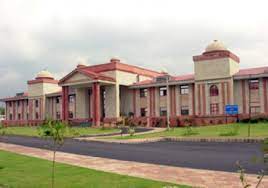
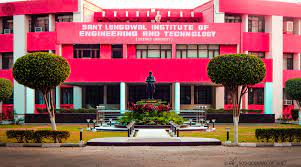
University of Engineering and Technology Roorkee
University of Engineering and Technology Roorkee Admission Open
University of Engineering and Technology Roorkee Highlights
| Institute Type | Private University |
| Name of the Institute | University of Engineering and Technology Roorkee |
| Address | UETR, 7 kms Milestone, Roorkee-Haridwar Road (NH-58), Post Box No. 27, Vardhmanpuram, Roorkee – 247667, District. Haridwar, Uttarakhand (INDIA). |
| City | Roorkee |
| State | Uttarakhand |
| Pincode | 307026 |
| Landline | 8070500600, 9027916050 |
| uetradmission@gmail.com | |
| Website | https://coeruniversity.in/ |
Are you intreseted this college
Suggested Communities
IIT Roorkee will conduct the JEE Advanced exam on 17 May 2026. The registration will begin on 23 April 2026 at 10 am on their official website, jeeadv.ac.in.
- As per last year’s data, 1,87,223 candidates registered for the exam, but there were only 18,188 seats available across 23 IITs, showing the tough competition.
- Candidates who qualify for JEE Main and meet the eligibility criteria related to age limit, no. of attempts, and Class 12 examination are eligible to appear for the exam.
- As per trends, the exam pattern varies section-wise, as multi-correct questions have partial marking, whereas numerical answers have no negative marking.
What is JEE Advanced?
The Joint Entrance Examination (JEE) Advanced is a national-level entrance examination conducted for students seeking admission to IITs in India.
- The exam will be conducted in two mandatory papers: Paper 1 and Paper 2 on the same day in 2 shifts.
- Both papers will be conducted in CBT mode, consisting of 17 questions in Physics, Chemistry, and Mathematics respectively.
- After qualifying for this exam, admission to undergraduate programs in engineering and science at Top IITs, and also other institutes like IISc, IIPE, IIST, RGIPT, etc.
Last year, among 2,50,000 JEE Main qualified candidates, only approx. 75% registered for the exam, and 54,378 candidates qualified for admission, among whom only 18,188 actual allotted seats were available at 23 IITs through JoSAA.
- The Joint Implementation Committee (JIC) sets a minimum qualifying mark to ensure they have roughly three candidates per seat.
- This happens because many top rankers may drop out of counselling to join other top non-IITs (like IISc, IIST, and IISERs) or top NITs or less preferred IITs based on their preference and availability.
JEE Advanced 2026 Highlights
Particulars
Details
Governing Body
IIT Council
Exam Level
National Entrance Test
Exam Mode
Online (CBT)
Papers
Paper 1 and Paper 2
Subjects
Physics, Chemistry, Mathematics
Medium
English & Hindi
Exam Date
17 May 2026
Registration Dates
23 April 2026, 10 am to 02 May 2026
Eligibility
Top 2,50,000 JEE Main 2026 qualifiers
No. of Attempts allowed
2 attempts (consecutive years)
Total Questions
102 questions (51 questions in each paper)
Expected Seat Intake
18,200 across 23 IITs
Information Brochure
PDF Link (English)
Official Website
jeeadv.ac.in
Important Dates
Date (Timeline)
Event
6 April 2026, 10am
Online Registration Start Date (Foreign National and OCI/PIO (F) Candidates)
23 April 2026, 10am
Online Registration Start Date (for JEE Main 2026 Qualified Candidates)
2 May 2026
Registration End Date
4 May 2026
Last date for Fee Payment
11 May 2026, 10am - 17 May 2026, 2:30pm
Admit Card Dates
16th May 2026
Choosing of scribe by PwD candidates
17 May 2026
JEE Advanced Exam Date
Paper 1: 9 am-12 pmPaper 2: 2:30pm - 5:30pm
Paper Timing Slots
Source: jeeadv.ac.in
Ques. What is the criterion to decide which IIT will conduct the JEE Advanced exam?
Ques. How is the exam pattern of JEE Advanced different from JEE Main?
JEE Advanced 2026 Eligibility Criteria
If you want to appear in the JEE Advanced exam, there are a few eligibility criteria that must be fulfilled by each and every student that are mentioned:
Criteria
Eligibility
Performance in JEE Main 2026
Top 2,50,000 JEE Main 2026 qualified candidates across all categories
Age Limit
Candidates born on or after October 1, 2001 (5-year relaxation for SC/ST/PwD)
Number of attempts
A maximum of two times in two consecutive years
Appearance in Class 12 (or equivalent) exam
Candidates passing Class 12 in 2025 or 2026 with PCM or 12th results after 18 June 2024 are also eligible
Earlier admission at IITs
Candidates not admitted to an IIT under any academic program listed in JoSAA Business Rules of 2025
Foreign Nationals and OCI/PIO Candidates
Candidates are not required to write JEE Main 2026 and may register for JEE Advanced 2026 directly (General Category)
JEE Advanced 2026 Registration
The JEE Advanced 2026 Registration Process will start on 23rd April 2026, after the JEE Mains Results are declared. The registration portal will close by 2nd May 2026.
JEE Advanced 2026 Registration Fees
The JEE Advanced Registration Fee is similar to the previous year. The fee structure is expected to differ according to the candidate’s category, gender, and nationality.
JEE Advanced Registration Trends
In recent years (2023 to 2025), the gap between registered and appeared is typically approx. 4,000 to 9,000, indicating high turnout ratios.
- Registrations rose steadily from around 1,50,000–1,70,000 (2017 to 2022) to around 1,80,000–1,90,000 in 2023 to 2025.
- From the years 2023 to 2025, the number of candidates who appeared for the exam was approximately around 1,80,000 candidates.
Year
Registered Candidates
Appeared Candidates
2017
171,814
159,540
2018
165,656
155,158
2019
174,432
161,319
2020
160,838
150,838
2021
151,193
141,699
2022
160,038
155,538
2023
189,744
180,372
2024
186,584
180,200
2025
187,223
180,422
JEE Advanced 2026 Exam Pattern
The JEE Advanced 2026 Exam will be held in an online CBT Mode, having 2 compulsory exams: Paper 1 and Paper 2, each of 3 hours.
The JEE Advanced Exam will test Physics, Chemistry and Mathematics by using different types of questions, including MCQs, MSQs, and NAT Questions.
JEE Advanced 2026 Paper 1
Paper 1 will be conducted on 17 May 2026 and timings are 9am to 12pm
- Paper 1 will test the conceptual clarity along with accuracy for Mixed MCQs, NATs, and Matching Questions.
- There will be partial marking for Multiple correct MCQs, and NAT Questions will not have any negative marking.
Paper 1 Pattern (subject-wise)
Section
Type of Questions
No. of Questions
Marking Scheme
Total Marks
1
Single Correct MCQs
4
+3 for correct, -1 for incorrect, 0 for unattempted
12
2
Multiple Correct MCQs
3
+4 (all correct), +3 (3 out of 4 correct), +2 (2 correct), +1 (1 correct), 0 (none), -2 (others)
12
3
Numerical Answer Type (NAT)
6
+4 for correct, no negative marking
24
4
Matrix Match
4 (2)
+4 for fully correct, -1 for incorrect, 0 for unattempted
12
Total
17
60
Therefore, JEE Advanced 2026 total marks for paper 1 are
Physics + Chemistry + Mathematics = 60 + 60 + 60 = 180 Marks
JEE Advanced 2026 Paper 2
Paper 2 will be conducted on 17 May 2026 and timings are 2:30pm to 5:30pm
- The JEE Advanced Paper 2 is expected to be more lengthy, including objective-type and numerical solving skills with complex NATs.
- There are more Numerical Answer Questions with an advantage in solving questions.
Paper 2 Pattern (subject-wise)
Section
Type of Questions
No. of Questions
Total Marks
1
Single Correct MCQs
4
12
2
Multiple Correct MCQs
3
12
3
Numerical Answer Type (NAT)
6
24
4
Paragraphs
4 (2)
12
Total
17
60
Therefore, JEE Advanced 2026 total marks for paper 2 are
Physics + Chemistry + Mathematics = 60 + 60 + 60 = 180 Marks
JEE Advanced 2026 Marks Distribution
The JEE Advanced does not have a fixed marking scheme. As every year, the exam pattern, number of questions, and marking scheme vary and are mentioned at the time of the exam in the question paper.
JEE Advanced 2026 Syllabus
The JEE Advanced syllabus for 2026 has been released and can be downloaded from the official website at jeeadv.ac.in.
- The JEE Advanced 2026 Syllabus follows the pattern of NCERT Class 11 & 12 Physics, Chemistry, and Mathematics, along with the application and integration of concepts.
- The JEE Advanced Paper 1 focuses on the basics and application, and Paper 2 will test advanced concepts.
JEE Advanced Paper 1 Syllabus
- The JEE Advanced Paper 1 includes the basics of all concepts.
- More weightage is given to Mechanics, Algebra and Physical Chemistry.
- The Questions are based on the application, and problem-solving fundamentals are required.
Subject
Key Topics
Physics
Mechanics, Thermodynamics, Waves and Oscillations, Electrodynamics, Modern Physics
Chemistry
- Physical Chemistry: Equilibrium, Thermo, Electrochemistry
- Organic Chemistry: Hydrocarbons, Biomolecules
- Inorganic Chemistry: Periodic Table, Coordination Compounds
Mathematics
Algebra, Probability and Statistics, Trigonometry, Differential Calculus and Vectors, Coordinate Geometry
JEE Advanced Paper 2 Syllabus
- In Paper 2, focus is given towards advanced problem-solving.
- It covers topics like Optics, Modern Physics, Organic Chemistry and Advanced Calculus.
Subject
Key Topics
Physics
Rotational Dynamics, Gravitation, Electromagnetic Waves, Optics, Modern Physics
Chemistry
- Physical Chemistry: Kinetics, Surface Chemistry
- Organic Chemistry: Aromatic Compounds, Polymers
- Inorganic Chemistry: Metallurgy, Chemical Bonding
Mathematics
Matrices and Determinants, Differential Equations, 3D Geometry, Integral Calculus and Vectors
JEE Advanced Expected Qualifying Marks 2026
In the CRL, a minimum of 7 marks is required per subject, and 74 marks are required.
The SC/ST Category has to score 3 marks for each subject and, in aggregate, 37 marks.
Category/Rank List
Minimum Marks Subject-Wise
Minimum Aggregate Marks (out of 300)
Common Rank List (CRL)
7 marks
74 marks (20.56%)
GEN-EWS
6 marks
66 marks (18.33%)
OBC-NCL
6 marks
66 marks (18.33%)
SC/ST/PwD (all lists)
3 marks
37 marks (10.28%)
Preparatory Course (PC)
1 mark
18 marks (5%)
JEE Advanced 2026: Exam Date, Registration, Syllabus, Previous Year Papers and Mock Test
4-Month Preparation Strategy
This plan is aligned to exam behavior: subject cut-offs, section-wise marking, and combined Paper 1 & Paper 2 scoring.
Duration
Focus Area
What to Do
Week 1–4
Pattern & Weakness Mapping
Analyse 10–15 years PYQs; tag questions by type and subject; identify cutoff-risk areas in PCM
Concept Gaps
Revise weak Class 11 topics first, then Class 12; re-derive formulas used in PYQs
Error Tracking
Maintain an error log; classify mistakes into logic, calculation, and reading
Week 5–8
Section-wise Practice
Practice single, multi-correct, numerical, matrix match separately; limit attempts in high-negative sections
Numerical Accuracy
Focus on calculation precision and estimation; avoid guess-based attempts
Subject Balance
Improve the lowest-scoring subject to stay above cutoff range
Week 9–12
Paper Solving
Solve Paper 1 and Paper 2 individually, then together under full time limits
Time Strategy
Fix attempt order; decide skip rules for risky questions
Practice Strategy
Practice continuous 6-hour mock sessions weekly
Week 13–16
Attempt Strategy
Finalise safe vs risky attempt strategy; reduce over-attempting
Error Reduction
Eliminate recurring mistakes from logs; tighten option checking
Final Revision
Revise formulas and PYQ-based concepts only; no new sources
JEE Advanced Topper’s Strategy
This video by @ALLEN JEE features an in-depth interview with Rajit Gupta, AIR-1 in JEE Advanced 2025, who shared his preparation journey, study strategies, and mindset related to the highly competitive IIT entrance exams.
Key Insights:
- Maintaining a flexible daily study routine, rather than rigid schedules, helps students to focus on the syllabus.
- Consistent work with the right direction is the key to success.
Exam Day Approach:
- Calm and compared approach, leveraged test practice to manage exam stress and temperament.
- Exam requires innovative thinking and a thorough preparation strategy.
Final Advice:
“Hard work has no substitute. Only Hard work can give you success.”
JEE Advanced 2026: Exam Date, Registration, Syllabus, Previous Year Papers and Mock Test
test
IIT Roorkee will conduct the JEE Advanced exam on 17 May 2026. The registration will begin on 23 April 2026 at 10 am on their official website, jeeadv.ac.in.
- As per last year’s data, 1,87,223 candidates registered for the exam, but there were only 18,188 seats available across 23 IITs, showing the tough competition.
- Candidates who qualify for JEE Main and meet the eligibility criteria related to age limit, no. of attempts, and Class 12 examination are eligible to appear for the exam.
- As per trends, the exam pattern varies section-wise, as multi-correct questions have partial marking, whereas numerical answers have no negative marking.
What is JEE Advanced?
The Joint Entrance Examination (JEE) Advanced is a national-level entrance examination conducted for students seeking admission to IITs in India.
- The exam will be conducted in two mandatory papers: Paper 1 and Paper 2 on the same day in 2 shifts.
- Both papers will be conducted in CBT mode, consisting of 17 questions in Physics, Chemistry, and Mathematics respectively.
- After qualifying for this exam, admission to undergraduate programs in engineering and science at Top IITs, and also other institutes like IISc, IIPE, IIST, RGIPT, etc.
Last year, among 2,50,000 JEE Main qualified candidates, only approx. 75% registered for the exam, and 54,378 candidates qualified for admission, among whom only 18,188 actual allotted seats were available at 23 IITs through JoSAA.
- The Joint Implementation Committee (JIC) sets a minimum qualifying mark to ensure they have roughly three candidates per seat.
- This happens because many top rankers may drop out of counselling to join other top non-IITs (like IISc, IIST, and IISERs) or top NITs or less preferred IITs based on their preference and availability.
JEE Advanced 2026 Highlights
| Particulars | Details |
|---|---|
| Governing Body | IIT Council |
| Exam Level | National Entrance Test |
| Exam Mode | Online (CBT) |
| Papers | Paper 1 and Paper 2 |
| Subjects | Physics, Chemistry, Mathematics |
| Medium | English & Hindi |
| Exam Date | 17 May 2026 |
| Registration Dates | 23 April 2026, 10 am to 02 May 2026 |
| Eligibility | Top 2,50,000 JEE Main 2026 qualifiers |
| No. of Attempts allowed | 2 attempts (consecutive years) |
| Total Questions | 102 questions (51 questions in each paper) |
| Expected Seat Intake | 18,200 across 23 IITs |
| Information Brochure | PDF Link (English) |
| Official Website | jeeadv.ac.in |
Important Dates
| Date (Timeline) | Event |
|---|---|
| 6 April 2026, 10am | Online Registration Start Date (Foreign National and OCI/PIO (F) Candidates) |
| 23 April 2026, 10am | Online Registration Start Date (for JEE Main 2026 Qualified Candidates) |
| 2 May 2026 | Registration End Date |
| 4 May 2026 | Last date for Fee Payment |
| 11 May 2026, 10am - 17 May 2026, 2:30pm | Admit Card Dates |
| 16th May 2026 | Choosing of scribe by PwD candidates |
| 17 May 2026 | JEE Advanced Exam Date |
| Paper 1: 9 am-12 pmPaper 2: 2:30pm - 5:30pm | Paper Timing Slots |
Source: jeeadv.ac.in
Ques. What is the criterion to decide which IIT will conduct the JEE Advanced exam?
Ques. How is the exam pattern of JEE Advanced different from JEE Main?
JEE Advanced 2026 Eligibility Criteria
If you want to appear in the JEE Advanced exam, there are a few eligibility criteria that must be fulfilled by each and every student that are mentioned:
| Criteria | Eligibility |
|---|---|
| Performance in JEE Main 2026 | Top 2,50,000 JEE Main 2026 qualified candidates across all categories |
| Age Limit | Candidates born on or after October 1, 2001 (5-year relaxation for SC/ST/PwD) |
| Number of attempts | A maximum of two times in two consecutive years |
| Appearance in Class 12 (or equivalent) exam | Candidates passing Class 12 in 2025 or 2026 with PCM or 12th results after 18 June 2024 are also eligible |
| Earlier admission at IITs | Candidates not admitted to an IIT under any academic program listed in JoSAA Business Rules of 2025 |
| Foreign Nationals and OCI/PIO Candidates | Candidates are not required to write JEE Main 2026 and may register for JEE Advanced 2026 directly (General Category) |
JEE Advanced 2026 Registration
The JEE Advanced 2026 Registration Process will start on 23rd April 2026, after the JEE Mains Results are declared. The registration portal will close by 2nd May 2026.
JEE Advanced 2026 Registration Fees
The JEE Advanced Registration Fee is similar to the previous year. The fee structure is expected to differ according to the candidate’s category, gender, and nationality.
JEE Advanced Registration Trends
In recent years (2023 to 2025), the gap between registered and appeared is typically approx. 4,000 to 9,000, indicating high turnout ratios.
- Registrations rose steadily from around 1,50,000–1,70,000 (2017 to 2022) to around 1,80,000–1,90,000 in 2023 to 2025.
- From the years 2023 to 2025, the number of candidates who appeared for the exam was approximately around 1,80,000 candidates.
| Year | Registered Candidates | Appeared Candidates |
|---|---|---|
| 2017 | 171,814 | 159,540 |
| 2018 | 165,656 | 155,158 |
| 2019 | 174,432 | 161,319 |
| 2020 | 160,838 | 150,838 |
| 2021 | 151,193 | 141,699 |
| 2022 | 160,038 | 155,538 |
| 2023 | 189,744 | 180,372 |
| 2024 | 186,584 | 180,200 |
| 2025 | 187,223 | 180,422 |
JEE Advanced 2026 Exam Pattern
The JEE Advanced 2026 Exam will be held in an online CBT Mode, having 2 compulsory exams: Paper 1 and Paper 2, each of 3 hours.
The JEE Advanced Exam will test Physics, Chemistry and Mathematics by using different types of questions, including MCQs, MSQs, and NAT Questions.
JEE Advanced 2026 Paper 1
Paper 1 will be conducted on 17 May 2026 and timings are 9am to 12pm
- Paper 1 will test the conceptual clarity along with accuracy for Mixed MCQs, NATs, and Matching Questions.
- There will be partial marking for Multiple correct MCQs, and NAT Questions will not have any negative marking.
Paper 1 Pattern (subject-wise)
| Section | Type of Questions | No. of Questions | Marking Scheme | Total Marks |
|---|---|---|---|---|
| 1 | Single Correct MCQs | 4 | +3 for correct, -1 for incorrect, 0 for unattempted | 12 |
| 2 | Multiple Correct MCQs | 3 | +4 (all correct), +3 (3 out of 4 correct), +2 (2 correct), +1 (1 correct), 0 (none), -2 (others) | 12 |
| 3 | Numerical Answer Type (NAT) | 6 | +4 for correct, no negative marking | 24 |
| 4 | Matrix Match | 4 (2) | +4 for fully correct, -1 for incorrect, 0 for unattempted | 12 |
| Total | 17 | 60 |
Therefore, JEE Advanced 2026 total marks for paper 1 are
Physics + Chemistry + Mathematics = 60 + 60 + 60 = 180 Marks
JEE Advanced 2026 Paper 2
Paper 2 will be conducted on 17 May 2026 and timings are 2:30pm to 5:30pm
- The JEE Advanced Paper 2 is expected to be more lengthy, including objective-type and numerical solving skills with complex NATs.
- There are more Numerical Answer Questions with an advantage in solving questions.
Paper 2 Pattern (subject-wise)
| Section | Type of Questions | No. of Questions | Total Marks |
|---|---|---|---|
| 1 | Single Correct MCQs | 4 | 12 |
| 2 | Multiple Correct MCQs | 3 | 12 |
| 3 | Numerical Answer Type (NAT) | 6 | 24 |
| 4 | Paragraphs | 4 (2) | 12 |
| Total | 17 | 60 |
Therefore, JEE Advanced 2026 total marks for paper 2 are
Physics + Chemistry + Mathematics = 60 + 60 + 60 = 180 Marks
JEE Advanced 2026 Marks Distribution
The JEE Advanced does not have a fixed marking scheme. As every year, the exam pattern, number of questions, and marking scheme vary and are mentioned at the time of the exam in the question paper.
JEE Advanced 2026 Syllabus
The JEE Advanced syllabus for 2026 has been released and can be downloaded from the official website at jeeadv.ac.in.
- The JEE Advanced 2026 Syllabus follows the pattern of NCERT Class 11 & 12 Physics, Chemistry, and Mathematics, along with the application and integration of concepts.
- The JEE Advanced Paper 1 focuses on the basics and application, and Paper 2 will test advanced concepts.
JEE Advanced Paper 1 Syllabus
- The JEE Advanced Paper 1 includes the basics of all concepts.
- More weightage is given to Mechanics, Algebra and Physical Chemistry.
- The Questions are based on the application, and problem-solving fundamentals are required.
| Subject | Key Topics |
|---|---|
| Physics | Mechanics, Thermodynamics, Waves and Oscillations, Electrodynamics, Modern Physics |
| Chemistry |
|
| Mathematics | Algebra, Probability and Statistics, Trigonometry, Differential Calculus and Vectors, Coordinate Geometry |
JEE Advanced Paper 2 Syllabus
- In Paper 2, focus is given towards advanced problem-solving.
- It covers topics like Optics, Modern Physics, Organic Chemistry and Advanced Calculus.
| Subject | Key Topics |
|---|---|
| Physics | Rotational Dynamics, Gravitation, Electromagnetic Waves, Optics, Modern Physics |
| Chemistry |
|
| Mathematics | Matrices and Determinants, Differential Equations, 3D Geometry, Integral Calculus and Vectors |
JEE Advanced Expected Qualifying Marks 2026
In the CRL, a minimum of 7 marks is required per subject, and 74 marks are required.
The SC/ST Category has to score 3 marks for each subject and, in aggregate, 37 marks.
| Category/Rank List | Minimum Marks Subject-Wise | Minimum Aggregate Marks (out of 300) |
|---|---|---|
| Common Rank List (CRL) | 7 marks | 74 marks (20.56%) |
| GEN-EWS | 6 marks | 66 marks (18.33%) |
| OBC-NCL | 6 marks | 66 marks (18.33%) |
| SC/ST/PwD (all lists) | 3 marks | 37 marks (10.28%) |
| Preparatory Course (PC) | 1 mark | 18 marks (5%) |
JEE Advanced 2026: Exam Date, Registration, Syllabus, Previous Year Papers and Mock Test
4-Month Preparation Strategy
This plan is aligned to exam behavior: subject cut-offs, section-wise marking, and combined Paper 1 & Paper 2 scoring.
| Duration | Focus Area | What to Do |
|---|---|---|
| Week 1–4 | Pattern & Weakness Mapping | Analyse 10–15 years PYQs; tag questions by type and subject; identify cutoff-risk areas in PCM |
| Concept Gaps | Revise weak Class 11 topics first, then Class 12; re-derive formulas used in PYQs | |
| Error Tracking | Maintain an error log; classify mistakes into logic, calculation, and reading | |
| Week 5–8 | Section-wise Practice | Practice single, multi-correct, numerical, matrix match separately; limit attempts in high-negative sections |
| Numerical Accuracy | Focus on calculation precision and estimation; avoid guess-based attempts | |
| Subject Balance | Improve the lowest-scoring subject to stay above cutoff range | |
| Week 9–12 | Paper Solving | Solve Paper 1 and Paper 2 individually, then together under full time limits |
| Time Strategy | Fix attempt order; decide skip rules for risky questions | |
| Practice Strategy | Practice continuous 6-hour mock sessions weekly | |
| Week 13–16 | Attempt Strategy | Finalise safe vs risky attempt strategy; reduce over-attempting |
| Error Reduction | Eliminate recurring mistakes from logs; tighten option checking | |
| Final Revision | Revise formulas and PYQ-based concepts only; no new sources |
JEE Advanced Topper’s Strategy
This video by @ALLEN JEE features an in-depth interview with Rajit Gupta, AIR-1 in JEE Advanced 2025, who shared his preparation journey, study strategies, and mindset related to the highly competitive IIT entrance exams.
Key Insights:
- Maintaining a flexible daily study routine, rather than rigid schedules, helps students to focus on the syllabus.
- Consistent work with the right direction is the key to success.
Exam Day Approach:
- Calm and compared approach, leveraged test practice to manage exam stress and temperament.
- Exam requires innovative thinking and a thorough preparation strategy.
Final Advice:
“Hard work has no substitute. Only Hard work can give you success.”
JEE Advanced 2026: Exam Date, Registration, Syllabus, Previous Year Papers and Mock Test
test
Blogs
Discover More university