Posted by Admin on 13-02-2024 in Shiksha hub
Ph.D from Dr. M.G.R. Educational and Research Institute, Chennai, Tamil Nadu, Introduction, Admission, Registration, Eligibility, Duration, Fees, Syllabus 2024
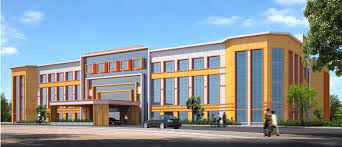
Introduction about Ph.D from Dr. M.G.R. Educational and Research Institute:
Dr. MGR Educational and Research Institute (ERI), a prestigious deemed university in Chennai, India, boasts "A" Grade accreditation from NAAC and recognition from UGC, AICTE, and MCI. Offering diverse Ph.D. programs in fields like Engineering, Humanities, Science, and Management, the institution prioritizes research with state-of-the-art facilities. Eligibility requires a relevant Master's degree, and admission involves an entrance exam and interview. Application fees vary, and tuition ranges from Rs. 28,000 to Rs. 55,000 per semester. Explore specific programs on their website, and for detailed guidance, contact the admissions office or relevant department.
Fee structure for the Ph.D from Dr. M.G.R. Educational and Research Institute :
|
Particulars |
1st Year Fees (INR) |
2nd Year Fees (INR) |
3rd Year Fees (INR) |
|
Tuition Fee |
50,000 |
50,000 |
50,000 |
|
Exam Fee |
5,000 |
5,000 |
5,000 |
|
Library Fee |
10,000 |
10,000 |
10,000 |
|
Laboratory Fee |
15,000 |
15,000 |
15,000 |
|
Internet & Computer Fee |
10,000 |
10,000 |
10,000 |
|
Research Advisory Committee Fee |
5,000 |
5,000 |
5,000 |
|
Stationery Fee |
5,000 |
5,000 |
5,000 |
|
Sports Affiliation Fee |
2,000 |
2,000 |
2,000 |
Admission process for Ph.D from Dr. M.G.R. Educational and Research Institute:
1. Eligibility Check:
-
Master's degree in the relevant discipline is mandatory.
-
Specific percentage requirements might vary depending on the program and your category (General, SC/ST/OBC etc.).
-
Refer to the official website for the latest eligibility criteria for each program.
2. Application:
-
Applications are usually accepted twice a year, in January and July.
-
You need to submit an online application form through the university website.
-
The application fee varies depending on the program.
-
Prepare supporting documents like transcripts, research experience certificates, and a statement of purpose.
3. Entrance Exam:
-
Shortlisted candidates have to appear for an entrance exam.
-
The exam format and content vary depending on the program.
-
Check the website for specific details and syllabus of the exam.
4. Interview:
-
Candidates who perform well in the entrance exam are called for an interview.
-
The interview assesses your research potential, motivation, and suitability for the program.
-
Prepare to discuss your research interests, proposed research topic, and relevant experience.
5. Selection and Admission:
-
Final selection is based on your performance in the entrance exam, interview, and academic record.
-
Selected candidates receive an offer letter with details of the program and fee structure.
-
Pay the admission fees and complete the necessary registration formalities.
Documents required for Ph.D from Dr. M.G.R. Educational and Research Institute:
Mandatory Documents:
-
Completed online application form: This will be available on the university website during the application period.
-
Application fee payment receipt: Proof of payment for the application fee.
-
Academic transcripts and certificates: Copies of your mark sheets and degree certificates for all academic qualifications (Bachelor's and Master's).
-
Entrance exam admit card and scorecard: If applicable, submit copies of your admit card and scorecard for the Ph.D. entrance exam.
-
Research experience certificates (if applicable): Provide documented proof of any research experience you have, such as publications, presentations, or participation in research projects.
-
Statement of purpose (SOP): An essay outlining your research interests, proposed research topic, and motivation for pursuing a Ph.D.
-
Letter of recommendation (LOR): Typically two LORs from academic referees familiar with your academic abilities and research potential.
-
Curriculum vitae (CV): A detailed resume highlighting your academic achievements, research experience, skills, and other relevant information.
Ph.D Syllabus of Course work in Dr. M.G.R. Educational and Research Institute:
|
PAPER NAME |
MAX. MARKS |
|
Research Methodology |
100 |
|
Computer Applications |
100 |
|
Advanced Computer Application |
100 |
|
Review Writing & Seminar on the Published Research Work in the Relevant Field |
50+50=100 |
|
TOTAL MARKS |
300 |
Research Methodology:
Unit-I Introduction
Meaning, Concept, Nature, Steps, Types and Characteristics of research. Scientific Inquiry, Philosophical and Sociological foundations of research Interdisciplinary approach and its implications in various research area.
Unit-II Methods of Research
Qualitative and quantitative methods of research like Historical, case study, ethnography, exposit facto, documentary and content analysis, survey (Normative, descriptive, evaluative etc.) field and laboratory experimental studies. Characteristics of methods and their implications in research area.
Unit-III Development of research proposal
Research proposal and its elements, Formulation of research problem-criteria of sources and definition Development of objectives and characteristics of objectives. Development hypotheses and applications.
Unit-IV Methods of data collection
Concept of sampling and other concepts related to sampling. Probability and non-probability samples, their characteristics and implications. Tools of data collections, their types, attributes and uses. Redesigning, research tools-like, questionnaire, opinionnaire, observation, interviews, scales and tests etc.
Unit-V Methods of data analysis
Analysis of qualitative data based on various tools. Analysis of quantitative data and it presentation with tables, graphs etc. Statistical tools and techniques of data analysis-measures of central tendency, dispersion.
Decision making with hypothesis testing through parametric and non-parametric tests. Validity and delimitations of research findings.
Unit-VI Report writing and evaluations
Principles of report writing and guide lines according to style manuals. Writing and presentation of preliminary, main body and reference section of report. Picture and Graphs. Introduction to SPSS. Evaluation of research report.
References:
-
Wilkinson & Bhandarkar: Methodology and Techniques of Social Research.
-
Pauline Vyoung: Scientific Social Surveys and Research.
-
Panneerselvam,R., Research Methodology, Prentice Hall Of India,New Delhi,2004
-
Kothari: Research Methodology.
-
Festinger. L & D. Katz: Research Methods in Behavioral Science.
-
Sellitz, Et Al: Research Methods in Social Relations
(For Non Computer Background)
Computer Application
Unit 1: Basics of Computer
Characteristics of Computers, Evolution of computers, computer memory, computer generations, Basic computer organization; System software, Application software, introduction to operating system, single user, multi-user, multi-tasking single tasking, application of computer for business and research, MS-windows, Linux.
Unit 2: Data Communication and Networks
Data communication concepts, local area network, wide area network, internet, intranet, extranet, website. E-mail, search engines-enterprise E-communication and E-collaboration
Unit 3: Using Internet for Research
The Internet: quick look, what is internet, Use of Internet, major internet services, electronic mail, www, downloading super tools for better computing Internet and the society, Use of E-Journals, Use of E-library, searching the keyword search engines, News and multimedia, governments, archives and statistics.
Unit 4: Introduction to Research Related Software’s
Introduction to Data analysis software-SPSS: Definition, objectives and features, data analysis using SPSS: Data entry creating variables, switching to data labels, data analysis: Frequencies, recording into different variables, cross tabulations and layers. Core calculation software, developing utility programs for research, Introduction to C programming.
Unit 5: Research Related Tools and Utilities
MS-Office and its application, File handing in window, various versions of MS- Office, Research publishing tool- MS-Word, Adobe acrobat, Graphics tool- MS- Excel, MS-Power Point: Creating presentations and adding effects, Subject/field specific tools.
(For the students in Engineering & Computer background)
Advanced Computer Application
Unit 1: Basics of Computer Organization
System software compilation and interpretation, phases of compilation process, Lexical analysis, Lex packages on Linux system, Parsing Techniques, code generation and optimization. Application software, software development models, requirement analysis and specification for software design, Programming techniques and tools, software validation and quality assurance techniques, software maintenances and advance concepts, software management. Operating system, functions of OS. Multiprogramming, multiprocessing and multitasking, memory management, Concurrent programming. Scheduling, study of Linux operating system.
Unit 2: Data Communication and Networks
Data communication concepts, local area network, wide area network, internet, intranet, extranet, website. E-mail, search engines-enterprise E-communication and E-collaboration
Unit 3: Working with Internet
Introduction to internet, INFLIBNET, sights (DOAJ), searching on the internet, using graphics on internet, E-mail. The use of multimedia on the internet, Security on the internet, exploring e-mail facilities. Web design, creating web pages, themes and graphics, linking web pages, Navigation and testing, Making the website interactive, Internet and the society, study of search engines, Use of EBSCO HOST online database of Academic Libraries.
Unit 4: Programming Fundamentals
Object oriented programming concepts, Classes, Objects, Installations, Inheritance, Polymorphism and Overloading, Elements of C++ tokens, identifiers, variables and constants, Data types, Operators, Control statements, Function parameter passing. Class and objects, Constructors and destructors, overloading inheritance templates, exception handling Relational database design and SQL: E-R diagrams, transformation and normalization, SQL, DDL, DML, DCL command database objects.
Unit 5: Research Related Tools and Utilities
MS-Office and its application, File handing in window, various versions of MS- Office, Research publishing tool- MS-word, Adobe acrobat, Graphics tool- MS- excel. MS-Power Point: Creating presentations and adding effects. Subject/Field specific tools.
REVIEW WRITING & SEMINAR ON THE PUBLISHED RESEARCH WORK IN THE RELEVANT FIELD
Each student will submit a review report on any general topic of subject or area of interest in subject which will carry 50 marks and student will also give a presentation/seminar of the same which will also carry 50 marks.
Dr. M.G.R. Educational and Research Institute in Bhagalpur, Bihar Highlights:
|
Feature |
Information |
|
Establishment |
2003 |
|
Type |
Deemed University |
|
Motto |
"Knowledge, Integrity, Excellence" |
|
Affiliation |
UGC, AICTE, MCI, NABH, INC, PCI, NCTE, BCI |
|
Official Website |
https://www.drmgrdu.ac.in/ |
|
Address |
E.V.R Periyar Salai (NH4 Highway), Maduravoyal, Chennai - 600095, Tamilnadu, India |
|
Academic Staff |
Over 300 highly qualified and experienced faculty members |
|
Programs Offered |
Undergraduate, Postgraduate, Doctoral programs across various disciplines including Engineering, Technology, Humanities, Science, Management, Pharmacy, Dentistry, Medicine, and more |
|
Accreditation |
"A" Grade by NAAC |
|
Facilities |
Central Instrument Facility, Animal House, Museum, Clinical Trial Centre, Law Moot Court, Media Laboratory, and more |
|
Research Focus |
Strong emphasis on research, with collaborations with national and international institutions |
|
International Collaborations |
Yes |
|
Student Facilities |
Wi-Fi enabled campus, well-equipped laboratories, library, sports facilities, hostels, and more |
|
Placement |
Excellent placement record, with partnerships with leading companies |
How to apply for Ph.D from Dr. M.G.R. Educational and Research Institute:
Eligibility:
-
Master's degree: Possess a Master's degree in the relevant discipline with a minimum of 55% marks (or equivalent grade) in the qualifying examination.
-
Entrance exam: Most programs require you to appear for an entrance exam conducted by Dr. MGR ERI. The format and content vary depending on the program.
-
Good academic record: A strong academic record in your previous studies is generally preferred.
Additional Considerations:
-
Specific program requirements: Some programs might have additional eligibility criteria like minimum marks in specific subjects, research experience, or publications. Refer to the official website of your chosen program for details.
-
Reservation categories: The institute follows reservations for various categories like SC, ST, OBC, as per government guidelines.
-
International students: International students might have additional requirements and procedures. Refer to the International Student Cell (ISC) section on the Dr. MGR ERI website for details.
Application Process:
-
Check application dates: Applications are typically accepted twice a year, in January and July. Visit the Ph.D. Admissions website: [[invalid URL removed]]([invalid URL removed]) for exact dates and deadlines.
-
Choose your program: Explore the listed programs and ensure you meet the eligibility criteria.
-
Register and apply online: Complete the online application form on the Dr. MGR ERI website during the application window. Pay the application fee as specified.
-
Entrance exam: Attend the prescribed entrance exam for your chosen program if applicable. Prepare based on the program's syllabus or guidance provided by the institute.
-
Interview (if shortlisted): If you perform well in the entrance exam, you might be shortlisted for an interview. Be prepared to discuss your research interests, proposed research topic, and qualifications.
-
Selection and admission: Final selection is based on your performance in the entrance exam, interview, and academic record. Selected candidates receive an offer letter with details of the program and fee structure.
Important documents:
-
Completed online application form
-
Application fee payment receipt
-
Academic transcripts and certificates
-
Entrance exam admit card and scorecard (if applicable)
-
Research experience certificates (if any)
-
Statement of purpose
-
Letter of recommendation(s)
-
Curriculum vitae
-
Other documents as specified by the specific program or category (e.g., caste certificate, NOC from employer)
Courses after Ph.D from Dr. M.G.R. Educational and Research Institute:
-
Postdoctoral research: You can continue your research career by pursuing a postdoctoral fellowship or position at another university, research institution, or government lab. This will allow you to gain further experience, publish more research, and potentially establish your own independent research program.
-
Faculty position: If you enjoy teaching and mentoring students, you can pursue a faculty position at a university or college. This will involve teaching undergraduate and graduate courses, conducting research, and securing funding for your research program.
Industry:
-
Research and development (R&D): Many companies have R&D departments that hire Ph.D. graduates to develop new products, technologies, or processes. This can be a great option if you want to apply your research skills to solve real-world problems and make a commercial impact.
-
Data science: There is a growing demand for data scientists in various industries, and a Ph.D. can give you a strong edge in this field. You can use your data analysis and problem-solving skills to extract insights from large datasets and help companies make better decisions.
-
Consulting: You can leverage your expertise as a consultant, advising companies on technical issues, developing strategies, or conducting research. This can be a good option if you enjoy working independently and on a variety of projects.
Other options:
-
Science communication: You can use your scientific knowledge and communication skills to explain complex scientific concepts to the public through writing, speaking, or other forms of media.
-
Policy and advocacy: You can use your expertise to inform policy decisions or advocate for science-based solutions to societal challenges.
-
Entrepreneurship: You can use your research and skills to start your own company or non-profit organization. This can be a rewarding option if you are passionate about a particular issue and want to make a difference.
Job profile after Ph.D from Dr. M.G.R. Educational and Research Institute:
1. Your specific Ph.D. field: Different fields naturally lead to different career paths. A Ph.D. in engineering might open doors in industrial research and development, while a Ph.D. in literature might lead to academia or publishing.
2. Your research focus: Your research topic within a certain field can further refine your job prospects. For example, a Ph.D. in AI focusing on healthcare might be attractive to pharmaceutical companies, while a Ph.D. in materials science focusing on sustainability might appeal to green technology firms.
3. Your career aspirations: Consider whether you prioritize research, teaching, industry application, entrepreneurship, or other goals. This will help you select the path that aligns with your ambitions.
4. Location preferences: Certain job opportunities might be concentrated in specific regions or countries.
Here are some general examples of job profiles available to Ph.D. graduates from Dr. MGR ERI, categorized by career pathway:
Academia:
-
Postdoctoral Researcher: Conduct advanced research under the guidance of senior faculty at universities or research institutions.
-
Research Associate: Collaborate with faculty on research projects and assist with laboratory tasks.
-
Faculty Member: Teach undergraduate and graduate courses, conduct research, and secure funding.
-
Research Scientist: Conduct independent research at government labs or research institutes.
Industry:
-
Research & Development (R&D) Scientist: Develop new products, technologies, or processes in areas related to your Ph.D. field.
-
Data Scientist: Analyze and interpret large datasets to solve business problems and inform decision-making.
-
Product Manager: Lead the development and launch of new products, leveraging your Ph.D. knowledge.
-
Consultant: Provide expert advice and solutions to companies based on your research expertise.
Other Paths:
-
Science Writer/Communicator: Explain complex scientific concepts to the public through various media.
-
Policy Analyst/Advocate: Use your expertise to inform policy decisions or advocate for science-based solutions.
-
Entrepreneur: Start your own company or non-profit organization utilizing your research and skills.
Scholarship available for the Dr. M.G.R. Educational and Research Institute:
Academic Merit Scholarship: This scholarship is awarded to students with outstanding academic performance in their qualifying examinations. The amount of the scholarship varies depending on the student's merit.Entrance Exam Scholarship: This scholarship is awarded to students who perform well in the institute's entrance exam for Ph.D. programs. The amount of the scholarship varies depending on the student's score in the exam.Scholarships for Specific Categories:
SC/ST/OBC Scholarship: This scholarship is awarded to students belonging to Scheduled Castes, Scheduled Tribes, and Other Backward Classes as per government norms. The amount of the scholarship varies depending on the student's category and merit.
Single Parent Scholarship: This scholarship is awarded to students who are single parents pursuing higher education.
Alumni Scholarship: This scholarship is awarded to meritorious students who are children or wards of Dr. MGR ERI alumni.
Ph.D from Dr. M.G.R. Educational and Research Institute, FAQ’s:
1. What are the eligibility criteria for Ph.D. admission at Dr. M.G.R. Educational and Research Institute?
- Candidates must possess a relevant Master's degree in the respective discipline.
- Specific percentage requirements may vary depending on the program and category.
2. How often does the institute accept Ph.D. applications?
- Applications are typically accepted twice a year, in January and July.
3. What is the application process for Ph.D. admission?
- Applicants need to submit an online application form through the university website during the specified application period.
- The application process includes paying the application fee and providing supporting documents.
4. Is there an entrance exam for Ph.D. admission, and what does it entail?
- Yes, there is an entrance exam for shortlisting candidates.
- The format and content of the exam vary based on the chosen Ph.D. program.
5. What happens after the entrance exam?
- Shortlisted candidates proceed to an interview stage, where their research potential and suitability for the program are assessed.
6. How is the final selection made for Ph.D. admission?
- Final selection is based on performance in the entrance exam, interview, and academic record.
7. What documents are required for Ph.D. application?
- Essential documents include the completed online application form, application fee payment receipt, academic transcripts, entrance exam admit card and scorecard (if applicable), research experience certificates, statement of purpose, letter(s) of recommendation, and curriculum vitae.
8. Can international students apply for Ph.D. programs?
- Yes, international students may have additional requirements and procedures. Details can be found on the International Student Cell (ISC) section of the institute's website.
9. What is the syllabus for the Ph.D. coursework at Dr. M.G.R. Educational and Research Institute?
- The coursework includes subjects like Research Methodology, Computer Applications, Advanced Computer Application, and a Review Writing & Seminar on the Published Research Work in the Relevant Field.
10. Are there any scholarships available for Ph.D. students? - Yes, the institute offers scholarships based on academic merit and specific categories such as SC/ST/OBC, single parents, and alumni.
11. What are the career options after completing a Ph.D. from Dr. M.G.R. Educational and Research Institute? - Career options include academia (postdoctoral researcher, faculty member), industry roles (R&D scientist, data scientist, consultant), science communication, policy advocacy, entrepreneurship, and more.
12. How can one contact the admissions office or relevant department for further guidance? - Contact details for the admissions office and specific departments can be found on the official website of Dr. M.G.R. Educational and Research Institute.
13. What facilities does the institute offer to Ph.D. students? - The institute provides facilities such as central instrument facilities, animal house, museum, clinical trial center, law moot court, media laboratory, and more.
14. Is the institute accredited? - Yes, Dr. M.G.R. Educational and Research Institute holds an "A" Grade accreditation from NAAC and is recognized by UGC, AICTE, MCI, and other regulatory bodies.
15. Can Ph.D. graduates from the institute pursue postdoctoral research? - Yes, graduates can pursue postdoctoral research at other institutions to further contribute to their field.
Conclusion:
For those committed to research and intellectual growth, pursuing a Ph.D. at Dr. MGR ERI offers a path towards significant contributions in various fields. Meeting program-specific eligibility, understanding costs, exploring research interests, and aligning with career goals are crucial considerations. The institute, with its accreditation, experienced faculty, and advanced infrastructure, provides a conducive environment for scholarly pursuits. Meritorious students can benefit from available scholarships. Embarking on a Ph.D. journey at Dr. MGR ERI demands dedication, perseverance, and passion, with the institution serving as a valuable partner in realizing academic ambitions. Conduct thorough research and engage with the institute for comprehensive guidance.
How Shiksha Hub helps you in
-
 Student Counsellors
 -
 Career Counseling
 -
 Research
 -
 24/7 Support
 -
 Scholarships
 -
 Community