Posted by Admin on 29-03-2023 in Shiksha hub
BSc Aqualogy Admission Registration, Eligibility, Duration, Fees, Syllabus 2024
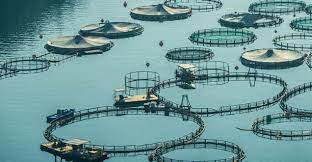
B.SC. AQUALOGY Course
Bachelor of Science in Aqualogy is an undergraduate 3-year duration full-time course offered by specific universities in India. BSc Aqualogy is a study of the investigation of the earth interrelated procedures such as climate, seas, and land surface and their relationships. Thus this interdisciplinary field includes the study of geography, zoology, science etc.
To be considered eligible to apply to apply to this course, students need to have passed Class 12 or equivalent with Physics, Chemistry and Biology as compulsory subjects from a recognized board.
BSc Aqualogy Admissions are usually done either on the basis of the candidate's performance in the qualifying examination or on the basis of the candidate’s performance in entrance exams.
BSc Aqualogy Syllabus
A list of topics taught to the students pursuing BSc Aqualogy course is tabulated below:
| Semester I | Semester II |
|---|---|
| Taxonomy of Finfish | Information and communication |
| Taxonomy of Shellfish | Freshwater aquaculture |
| Meteorology & Geography | Anatomy of finfish and shellfish |
| Principles of Biochemistry | Biology of Finfish and Shellfish |
| Fundamentals of Microbiology | Soil and water chemistry |
| Fishery Economics | Limnology |
| - | Food chemistry & Fish in Nutrition |
| - | Biochemical techniques & Instrumentation |
| Semester III | Semester IV |
| Fish Nutrition & Feed technology | Aquaculture engineering |
| Culture of fish food organisms | Ornamental fish production & Management |
| Inland Fisheries | Coastal aquaculture & Mari culture |
| Oceanography | Physiology of Finfish & Shellfish |
| Marine Biology | Fishing craft & gear technology |
| Refrigeration and freezing technology | Canning & Fish packaging technology |
| Statistical Methods in Fisheries | Extension education in Fisheries |
| - | Fisheries Administration & Legislation |
| Semester V | Semester VI |
| Finfish Breeding & Hatchery Management | Biotechnology & Bioinformatics in Fisheries |
| Shellfish Breeding & Hatchery management | Fishery Genetics & Breeding |
| Disease & management | Fish population dynamics & Stock assessment |
| Marine fisheries | Aquatic pollution & coastal zone management |
| Aquatic Ecology & Biodiversity | Fish products and By-products technology |
| Navigation & Seamanship | Fish Microbiology and quality assurance |
| Disaster management in Fisheries | Financing and marketing management in fisheries |
| - | Entrepreneurship development and communication skills |
| Semester VII | Semester VIII |
| Hands-on training in fisheries | In-plant training in Fisheries. |
BSc Aqualogy Admission Process
The BSc Aqualogy Admission Process can vary as per the university rules and regulations. Some universities grant admission to students in the BSc Aqualogy program based on merit. Some of the top-most Indian universities prefer conducting entrance exams to grant admission to qualified candidates.
The admission procedures followed in the Indian universities for admission to BSc Aqualogy are given below.
Merit-based admission
In merit-based admission, the universities offering BSc Aqualogy program grant admission to students based on their marks obtained in the Class 12 exams.
Entrance-Based Admission
The steps of the entrance-based admission are provided below:
- Registration: Students have to register for the entrance test by providing their email address, mobile number and password after which a login id will be created.
- Filling up of application form: On creation of login id, candidates are required to enter the required information correctly.
- Uploading of documents: In this step, candidates have to upload the necessary documents such as photograph, signature, id proof, Class 10 and 12 certificates etc.
- Application Fee: On uploading the requisite documents, students have to pay the requisite amount of application fee online.
- Issuing of Admit Card: Based on the details submitted by the students, the admission authority will issue the admit cards to the eligible students.
- Entrance Examination: After getting the admit card, exam dates will be released by different conducting bodies. Candidates have to sit for the entrance test and qualify the same to get admission.
- Declaration of Result: In the final stage, admission authorities will release the results of the entrance test they have appeared for.
- Enrolment: Successful candidates will then be allotted seats to the respective institutes.
BSc Aqualogy Eligibility Criteria
The minimum eligibility criteria for students who want to pursue an BSc Aqualogy course from Indian universities are given below:
- Students must have passed Class 12 or equivalent from a recognized educational Board
- Candidates must have studied Physics, Chemistry and Mathematics as compulsory subjects subjects in Class 12.
- Students must have scored an aggregate of at least 50% in Class 12. The minimum marks criteria may vary from one institute to another institute.
Popular BSc Aqualogy Entrance Exams
Some colleges organise their own entrance test. Only one centralised test that is conducted for admission is the Indian council of agricultural research common entrance test. ICAR entrance test is conducted in online mode that is 120 minutes duration.
| Name of the Exams | |
|---|---|
| NPAT | |
| CUET | |
| CUCET | |
| SET |
How to prepare for BSc Aqualogy entrance exams?
Candidates are advised to follow the below mentioned points to score well in the entrance examination:
- The most important thing for a student is to decide factors responsible for succeeding in any entrance examination is to be well aware of the latest exam pattern. Hence, one should go through the previous year's question papers and perform a proper analysis of the exam pattern.
- The candidates should know the updated syllabus, marking scheme, paper pattern etc.
- Start with the books of Class 11th and 12th NCERT, this will be very helpful for you. It will help you with the basic concepts and understanding.
- You can check the previous year papers for BSc Aqualogy entrance and according to that paper you will get the idea if questions are expected.
- You can also give online or offline tests to analyse your preparation.
After completion of the BSc Aqualogy course, students have a large number of career options. The future scopes for students of BSc Aqualogy are given below :
Higher and advanced education: Students can opt for higher advanced education after completing their BSc Aqualogy degree course. The higher education options they can pursue are :
- MSc.: If one wishes to pursue studies in the same field of education, he/ she can opt for MSc in Aqualogy or Aquaculture. It is a two-year course and the eligibility criteria include having a BSc degree in the related discipline.
- Competitive Exams:Students, after completing their graduation in Textile Design, can appear in different competitive examinations for government jobs, including UPSC CSE, IFS, and PSC of different states.
So, on completion of a BSc Aqualogy program students will be able to choose a career as per their skills and area of interest. You can go for higher education or you can also opt for a decent job.
Job Prospects and Career Options after BSc Aqualogy
- On completion of this course, students can apply for employment as a Biologist supervisors, Fishery manager, aquatic chemists, Physical Limnologists, Oceanographers, Marine Geologists aquarists, environmental planners, Post authority worker, Marine science, Writer etc.
- They can apply for the post in both government and private sectors.
- They can also apply for a job outside of India because of the demand for skill water science professionals
- Some of the popular employment areas after completing the BSc Aqualogy includes Aquariums, Marine National parks, educational institutes, Wastewater plants, Fishing companies etc.
- Academic options after BSc Aqualogy include Master of Science in Biology, Biological sciences, analogy, Conservation biology, Environmental biology etc.
Conclusion:
B.SC. AQUALOGY equips individuals with the knowledge and skills needed to tackle the complex challenges surrounding water resources. By embracing this field, we take a significant step towards ensuring a sustainable and water-secure future.
BSc Aqualogy FAQs
Ques. Is Choosing a BSc Aqualogy a good career?
Ans. Yes, there is demand for BSc Aqualogy passed graduates. They can apply for job opportunities in Aquariums, Marine National parks , educational institutes,Waste -water plants, Fishing companies etc.
Ques. What are the essential skills the candidates must have before applying for the BSc Aqualogy course?
Ans. Essential skills the candidates must require for the BSc Aqualogy course is Conceptual clarity of the subjects. Subjects such as Geography, Physics, Chemistry and Biology.
Ques. Are BSc in Marine Biology and Bsc Aqualogy the same?
Ans. No, They are different courses. However, the majority of the concepts taught are the same.
Ques. What are the disadvantages of taking the BSc Aqualogy course?
Ans. BSc Aqualogy is a rare specialization. This is why it is expensive and also this course is conducted by a few colleges
Ques. For admission to BSc Aqualogy course is there a common entrance test?
Ans. Yes, Common entrance test is conducted by ICAR (Indian council of agricultural research). Different universities, however, conduct their entrance tests.
How Shiksha Hub helps you in
-
 Student Counsellors
 -
 Career Counseling
 -
 Research
 -
 24/7 Support
 -
 Scholarships
 -
 Community